A collection of essays, reflections, and stories exploring the intersections of human rights, culture, and the visual world. Long-form narratives and field notes from Vienna and beyond will be shared here.
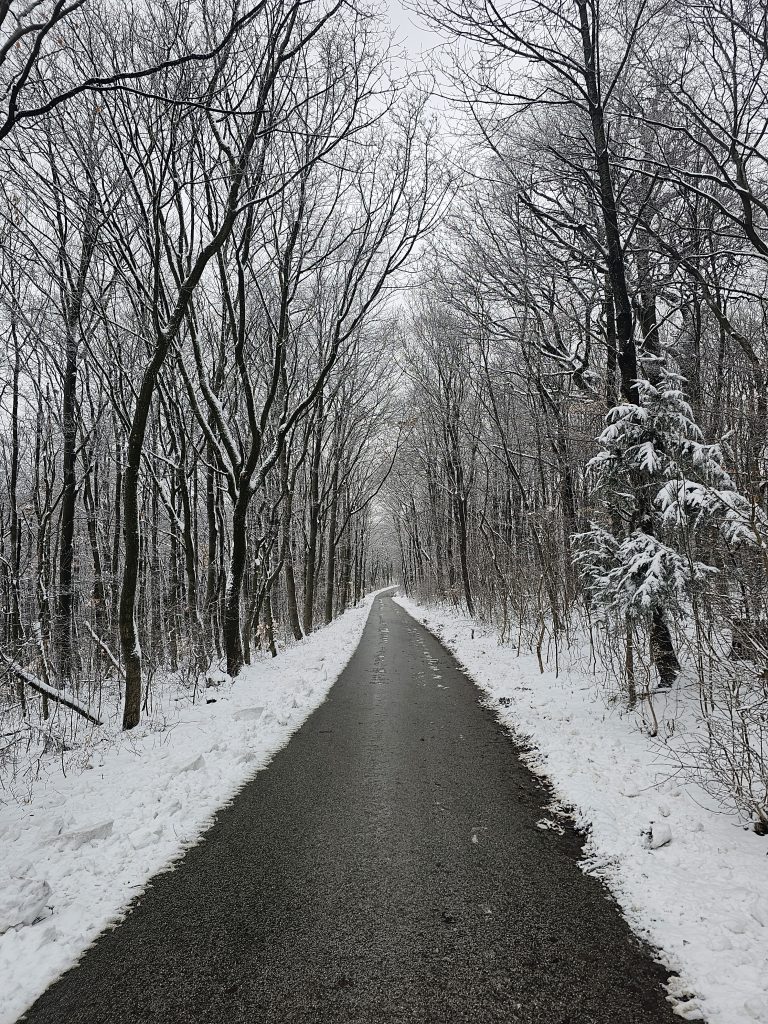
Solitude in White
Selected Research & Publications
“Evolvement Of Human Rights In Robben Island” Published in: World Affairs: The Journal of International Issues, Vol. 26, No. 3 (Autumn 2022). Authors: Waliul Hasanat, Sourov Ghose, and Nafisa Yeasmin. [Read the full article on JSTOR]
Essay and Narratives
LATEST POSTS
- Torments
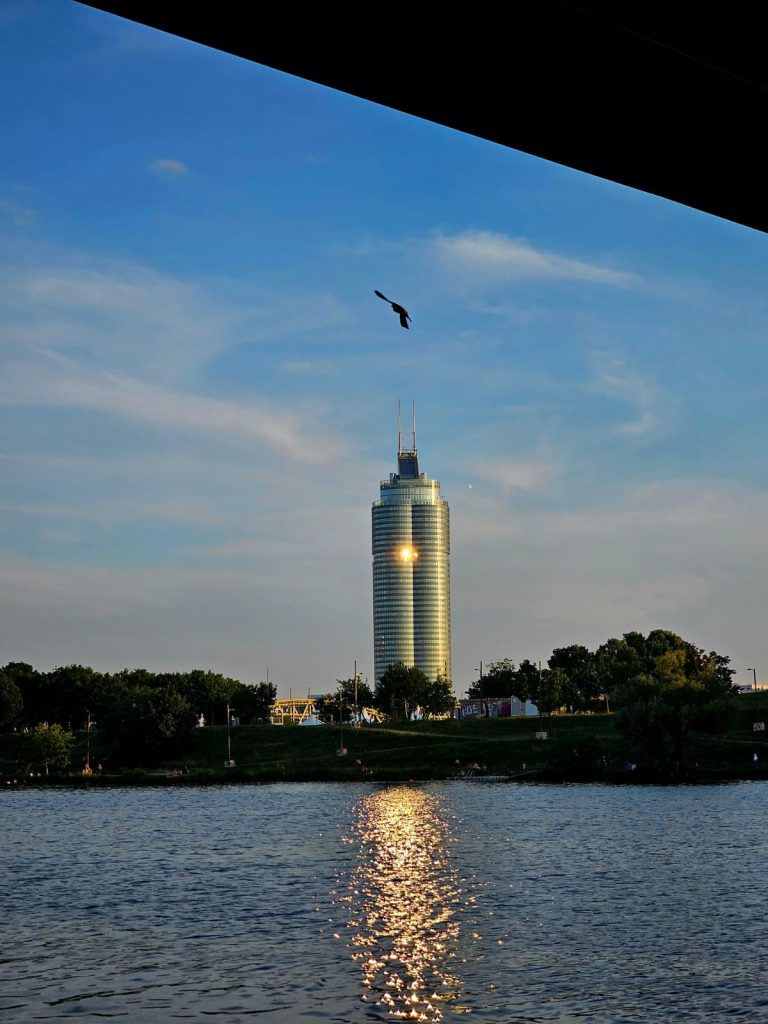
They travel, they migrate, they leave places to live in other places, searching for homes, searching for those they love. Love is never independent of any host to hold it. It also requires a place to be anchored, an ‘aadhar’ as they say. Just like the ghosts needing a host to live, to dream, and to meander through the leaves of trees on this route from birth to death. He went there with an interest quite reverse to the proposition. It was the dream that led him to a newer, a bluer sky with a minimum grey, shadowy curtains of the residues of the modern living. The endless sky, however, succumbed to the expections of ‘quality index’ thing, filled with enormous aluminium creatures with numerous identity marks on the skin, with noise and marking territories with the strechlines they make while moving from here to there. He sought a spot, he yearned for a spot, within the cosmic breathing of this unknown strange sky until he stumbled upon a sanctuary where the sunrays are peeping through a little more brightly.
Days passed, months passed, the breaths grew heavier; still he was not visibilised, the sunrays actively rejected him, refusing to let him be seen, be heard. The host needed him to prove that he was not caged, that he was not shackled, but how could he prove that he was not chained when the whole universe is a shackling cage? One can uncage oneself just to be submerged in other cages; one can only be free from one master to be mastered by others. He was in the sanctuary, and, in parallel, he was in the other eutopia where freedom finds its meaning, truth finds its absolutism, and soul finds its host. Yet he constantly found himself on the palms of ornithomancers, running from here to there along with the ancient sticks of the augurs, who were incessantly using him to divine the fortunes. He was torn apart between the omens; he was tormented, he was very close to giving up the last bits of hope he had. His only hope, his only pathway to break free from the agony was the sunlight – for only sunlight could save him from being dissolved into oblivion.

All of a sudden, the wind stirs, the contrails fade, the sky softens like a tender canvas with a little bouquet of clouds. ‘Little’! That should not be the proper description of the immensely enlightening thing as this clouds. Clouds, since early childhood, have been fountains of joy for him. Staring at the sky and imagining physical shapes out of these white and grey particles have always been pleasant small pastimes. From predators to prey, from food to shelter, everything could be physically replicated by these wool-like clouds. But, who? Who is this unknown piece of cloud? Where is it coming from with so much of a power to pull attractions towards itself? It cannot be equated to any other piece of cloud one has ever seen or heard of. It is a flower, a river, a bird. With the distinctness in its ways to move around the sky, the sparks in its luminous colours, the spellbinding music it makes when colliding with other usual cloud, and the soulful tears that it sheds in the forms of the rains… Oh dear Lord! It felt like the sunrays; it felt like archipelago of hopes.
Nothing could stop him from falling for this hope and its magnetic pull. He progressed with all of himself to touch and hold the soul of the stranger – a stranger; yet one who seemed known for decades. He violently endeavoured to caress the most precious and guarded form of that incarnation of hope. He, so zealously, strove to manifest the rhythms of his being, the reasons for his totality, the cherished, insignificant parts that summed up his whole self. Then there was this flying: up above the centuries-old trees, up above the mountains, up-above the rainbows – he did not stop. His heart beat faster and faster, his wings bled more and more, his eyes went blurrier and blurrier, but he kept on going, as if it were a divine call, as if his whole life would be suspended if he ever stopped…
No. No. No. It could not be. It could not be a lie at this crucial point. It could not be a dream. It could not be a cruel mirage. It had been there. Just there. Where is it, now? He kept asking again and again to himself. But, who would remind him that clouds are always shifting? They are never meant to fasten at a single point of the heaven, they are real yet entirely unreachable; they are agonizingly near, yet so infinitely far; they are truth and yet nothing more than a passing imagination…
- Wandered Lonely As A Sky
So, I was waiting for this. The City. Prague. Yet I did not truly know what was worth waiting for in this vast European peninsula. It feels so dull, so lifeless here, with people carrying nothing but grumpy faces. The nature, as well, has been so frugal to give away anything beautiful to this landscape. Well, I know there will be disagreements. But, do they have that wild rains that would submerge the entire villages? Like the ones we see in our country and then only take boats to roam around from here to there. Do they have Kaalboishakhi- the terrifying storm followed by the sort of a healing breeze where you could smell the fragrance of earth and there are fallen mangoes all around? Do these people know that such a wonder exists? Do they wait for that?
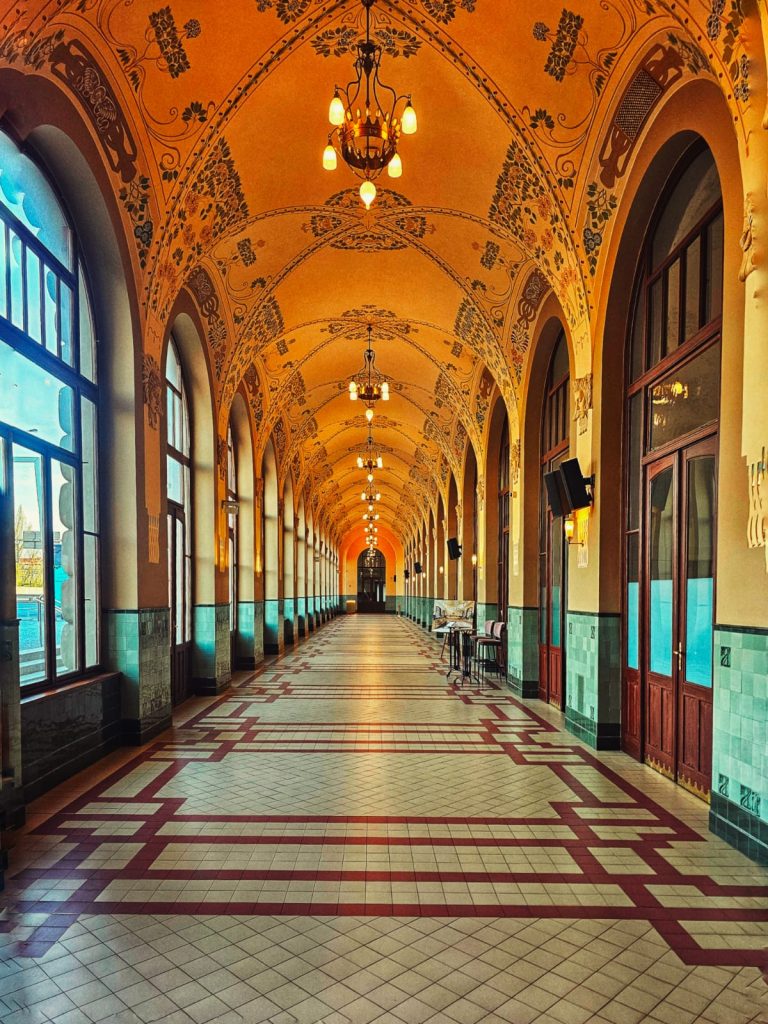
Hallway in the heart of the station
The scepticism about the beauty of European Cities; I had been carrying it like a coat in the summer warmth. The moment I reached the city, I confronted one of the most beautiful hallaways I have ever seen in very heart of the station. The delicate geometry of the arches, the symmetry of the golden lights, the intricate art; I could barely look away. After the first sense of shock, I started roaming through the veins of the city. The city felt like the old lady of Chaillot that had held onto her relics of the past so dearly, that time itself was rendered powerless to harm even it a bit. The castle, the towering gothic spires cathedral, these were eyeshatteringly beautiful and magnificent. It seemed like I wasn’t looking at them, it was rather the ancient sentinels that demanded the fullest of my attention.
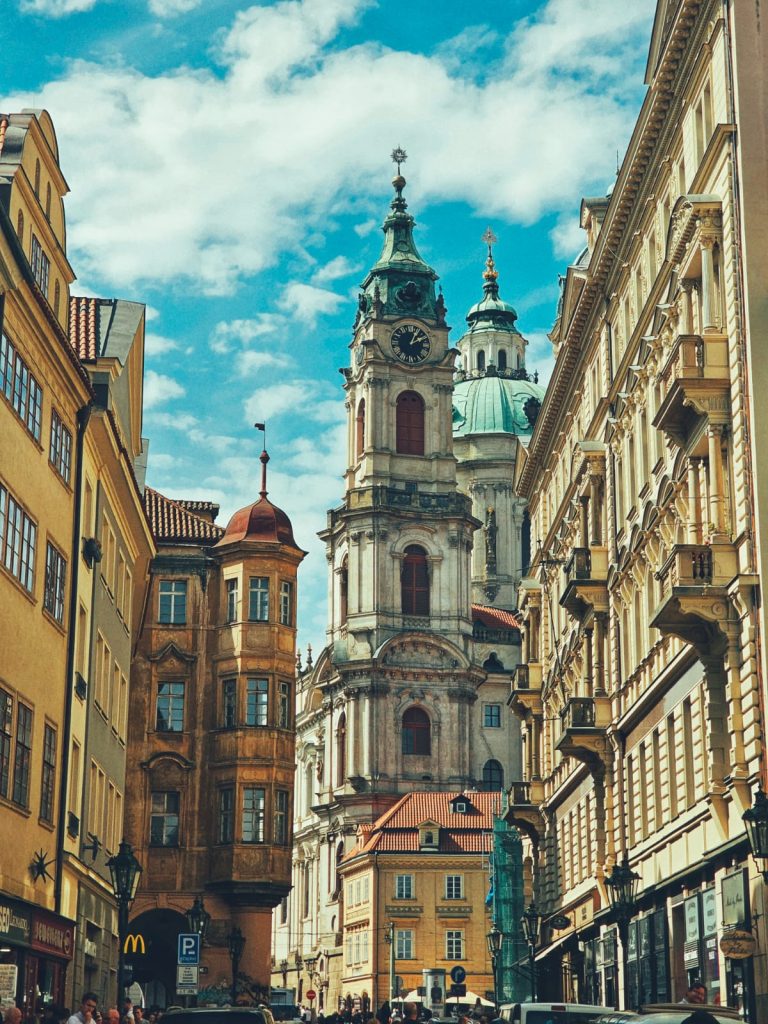
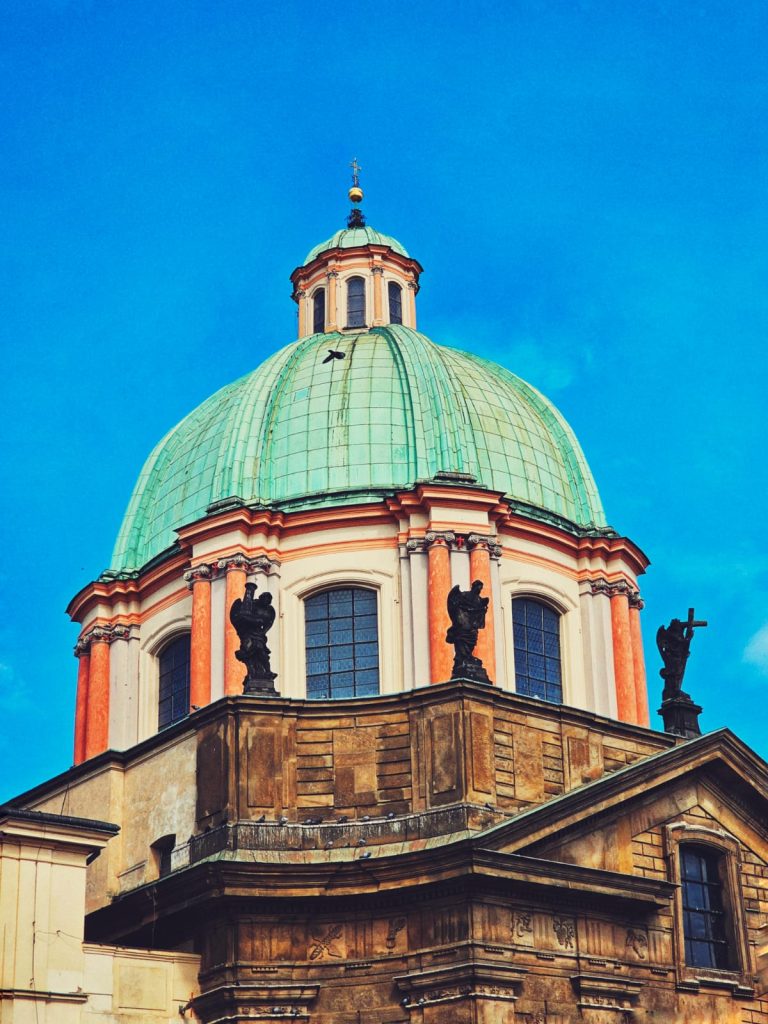
Relics from the Past
Moving away from the architecture, I reached the beautiful bridge full of tourists, Yet there were local artists, musicians, some were sitting exhaustion, some were drawn in work, and there were melodies all over. I pulled over and stood at the edge of the bridge looking at the river for some time. The Vitava was flowing beneath. So serene, so quite. Would it be able to look in the eyes of mighty Padma if they ever meet each other? Rivers meet somewhere, don’t they?
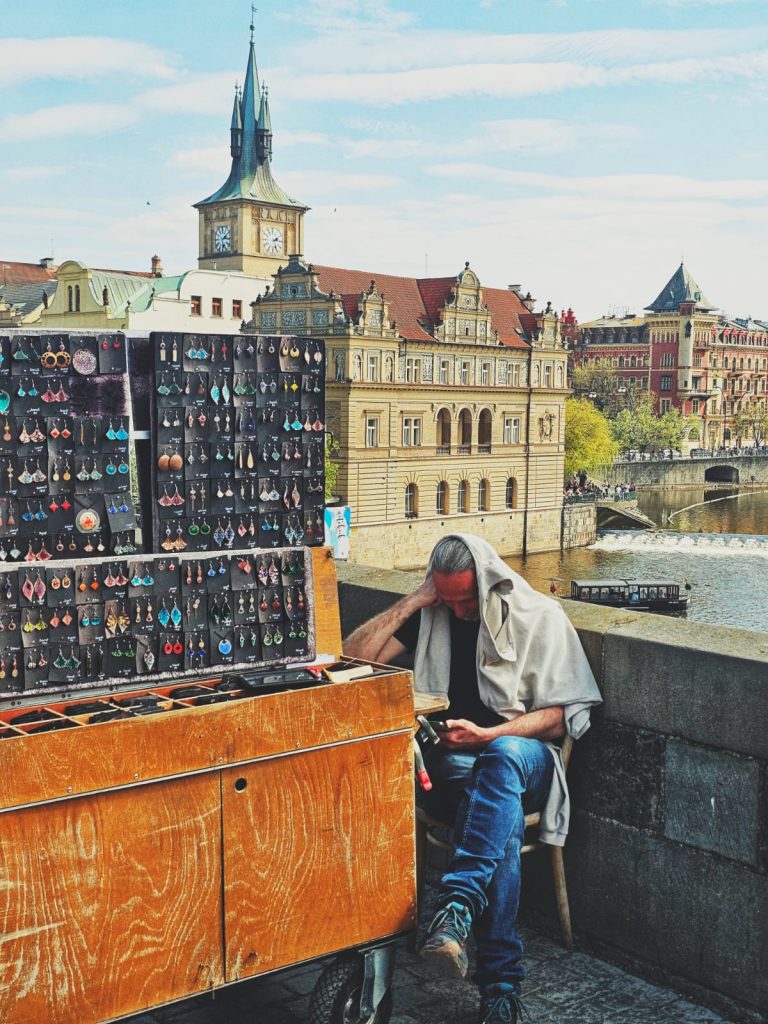
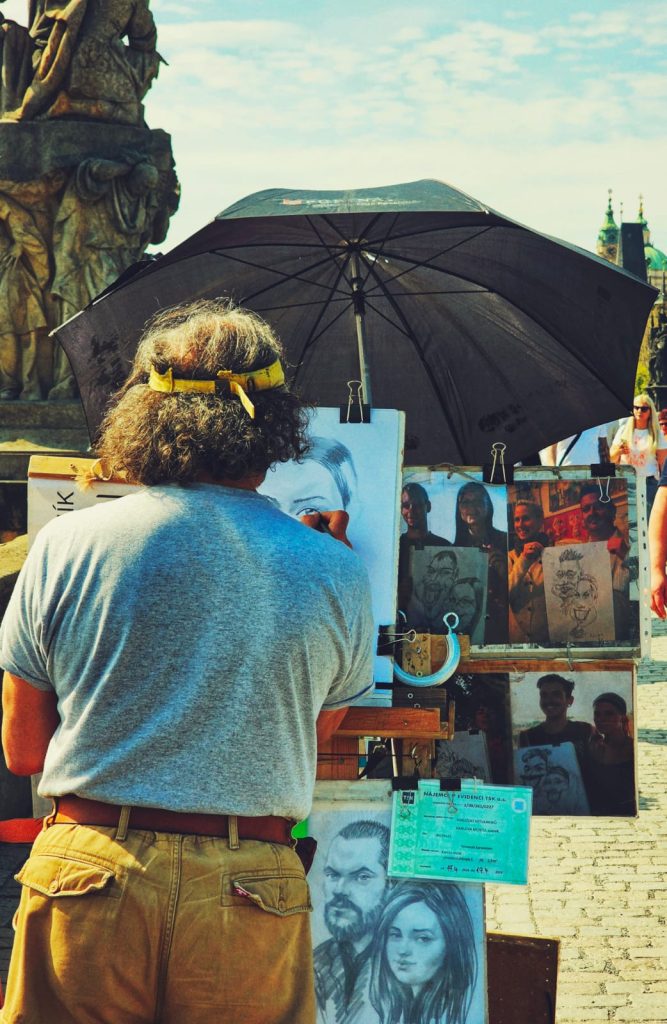
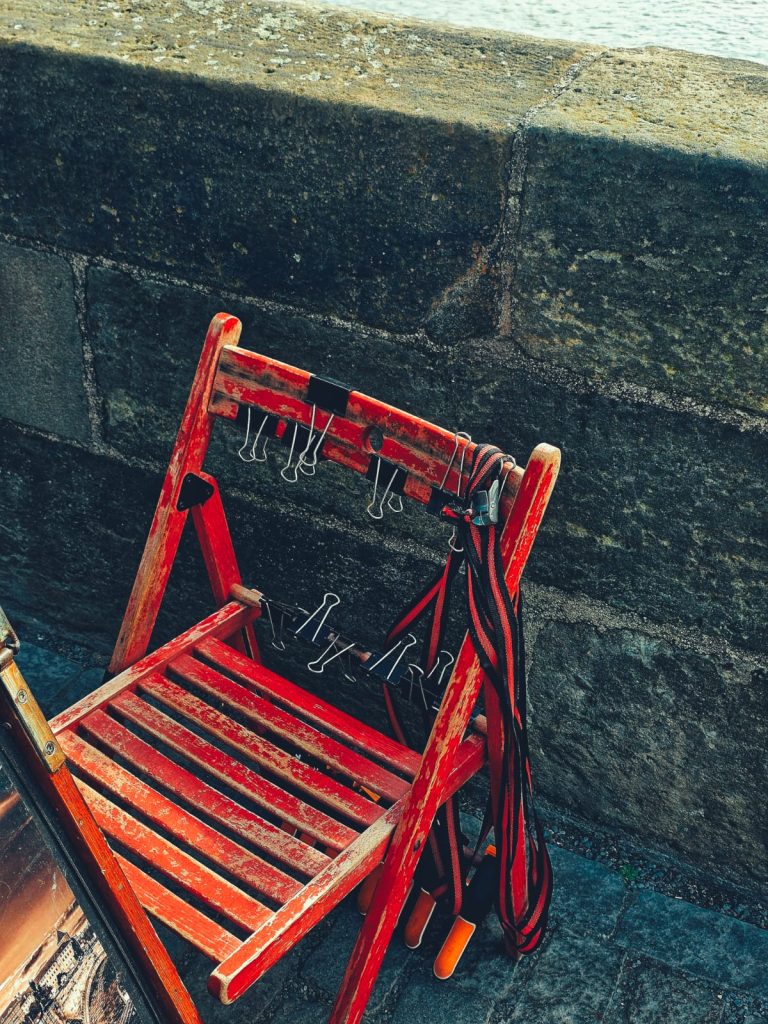
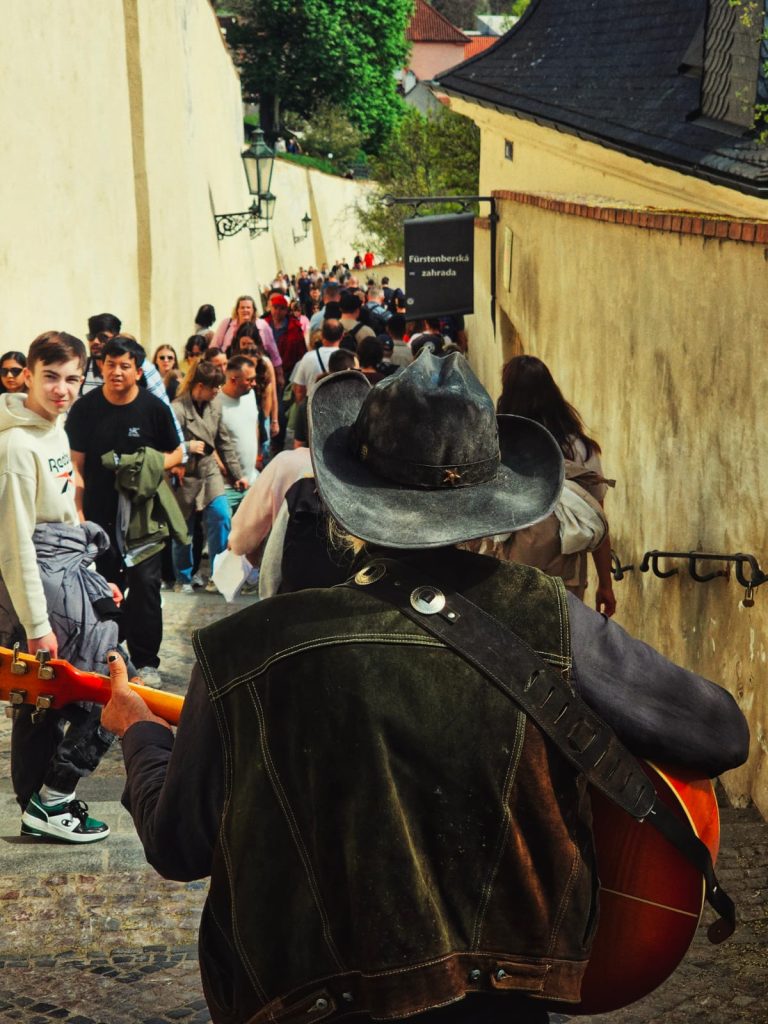
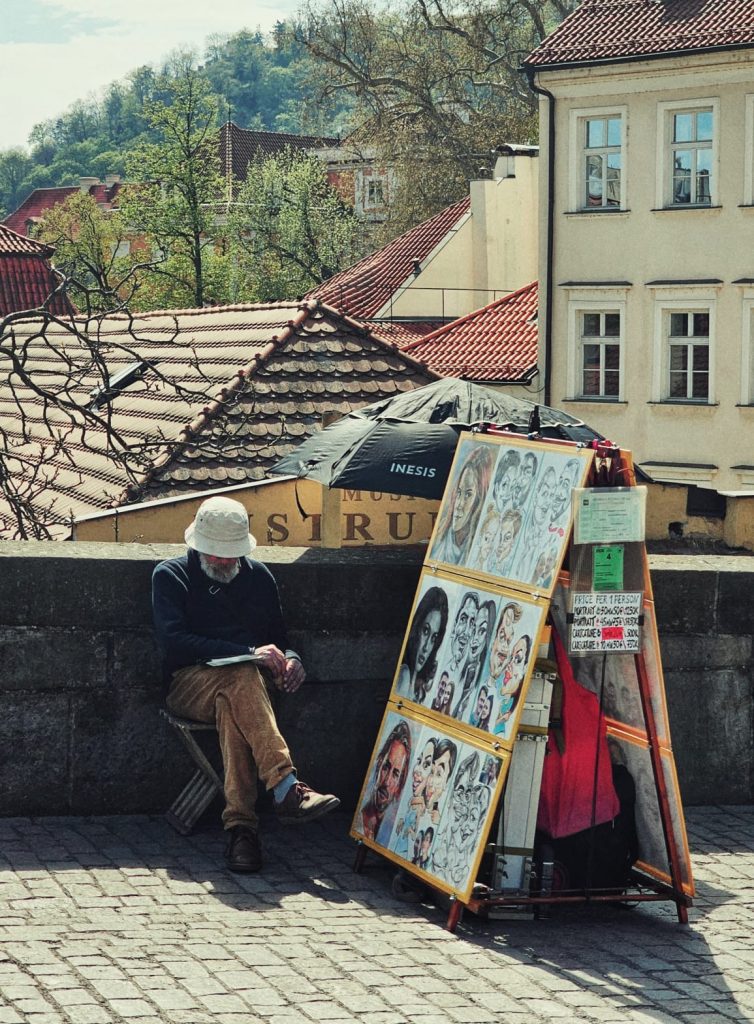
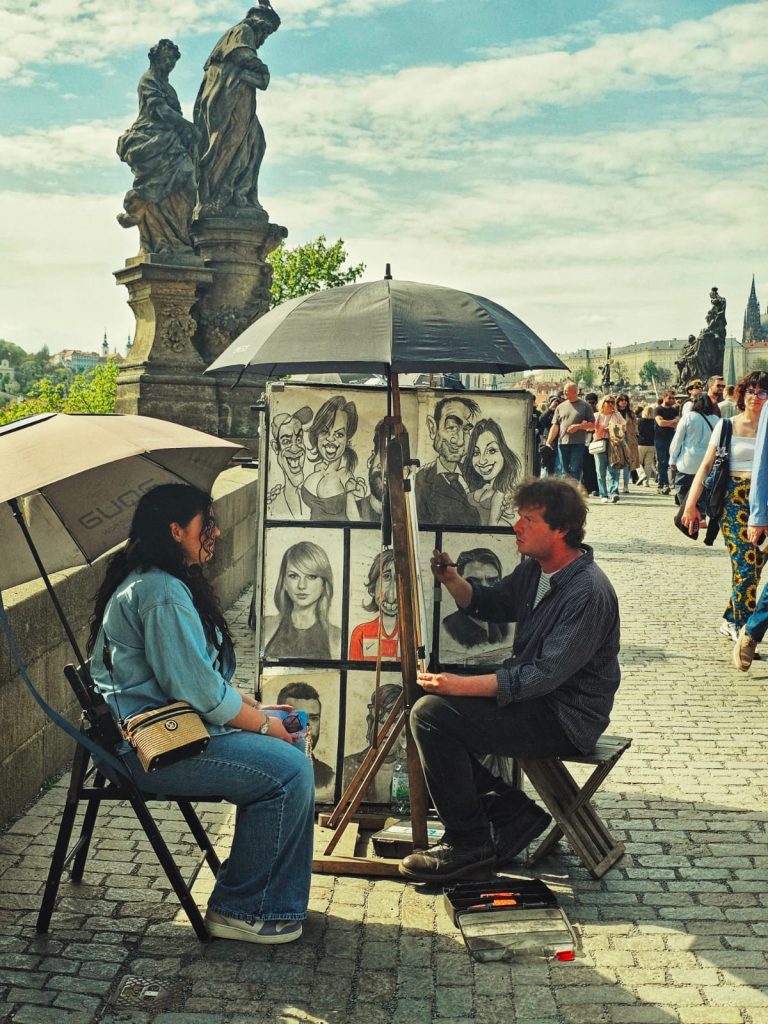
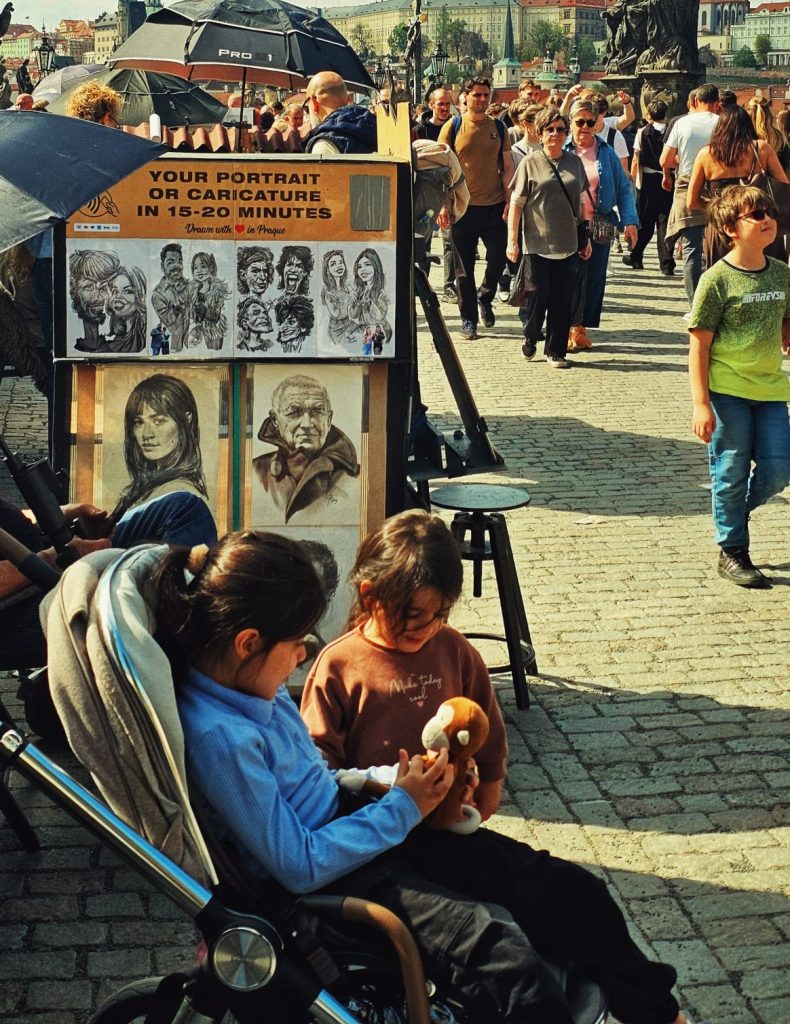
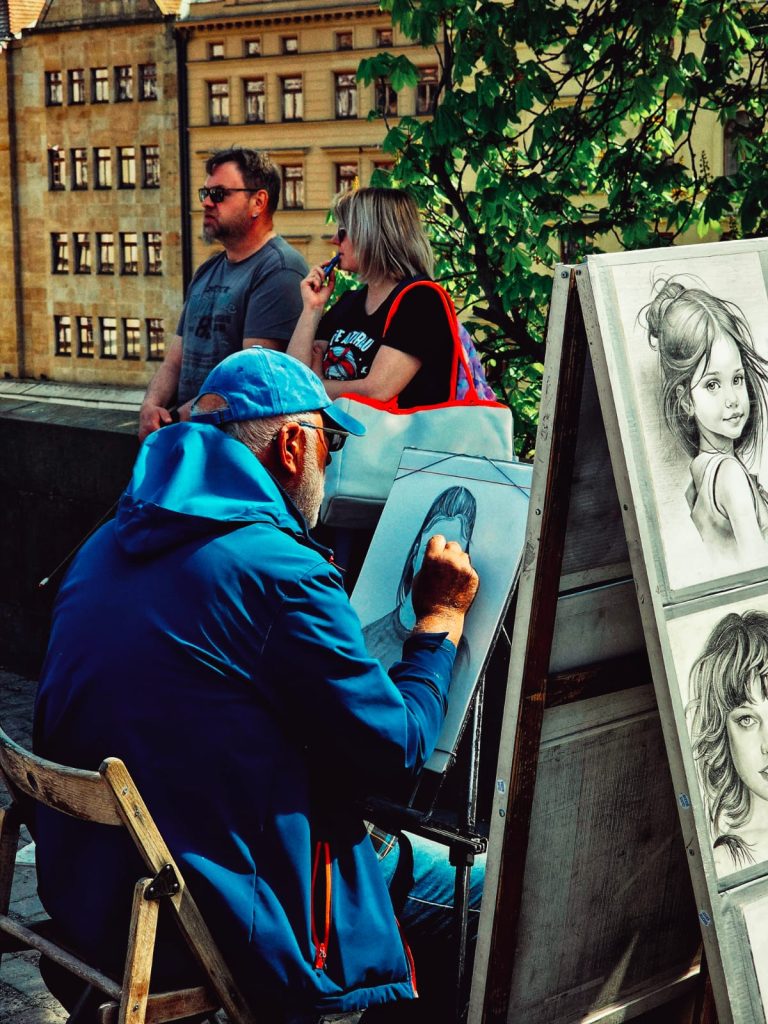
Life on the bridge
As my eyes were full of beauty all around, my stomach needed attention. I had my lunch and sat at the Kampa park for a couple of hours. Sitting there and watching people relaxing with their friends and family were really the call it a day things to do. I kept staring into the distance untill the sun slowly set.
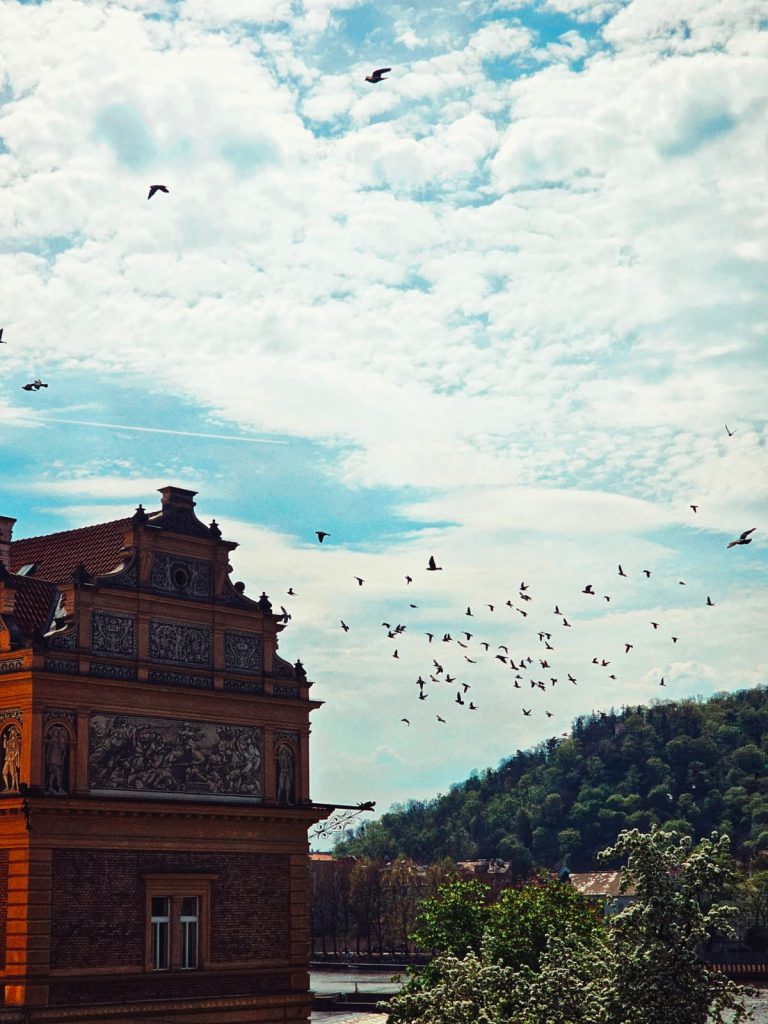
Staring at the distance
- Zagreb: Comfort in the Unfamiliar
I have been travelling consecutively for the last three weekends here and there in Europe, especially where flixbus takes me for cheap. I travel at nights, Friday nights, step into an unfamiliar city in the morning, roam around with a one click chatgpt itenerary, and take a bus back to Vienna in the evening. More like cattle grazing in the field and getting home with the sun setting on the horizons. There is somewhat a unique rhythm to it. The last three Friday mandatory ‘attendance lists’ were Budapest, Prague and Zagreb.
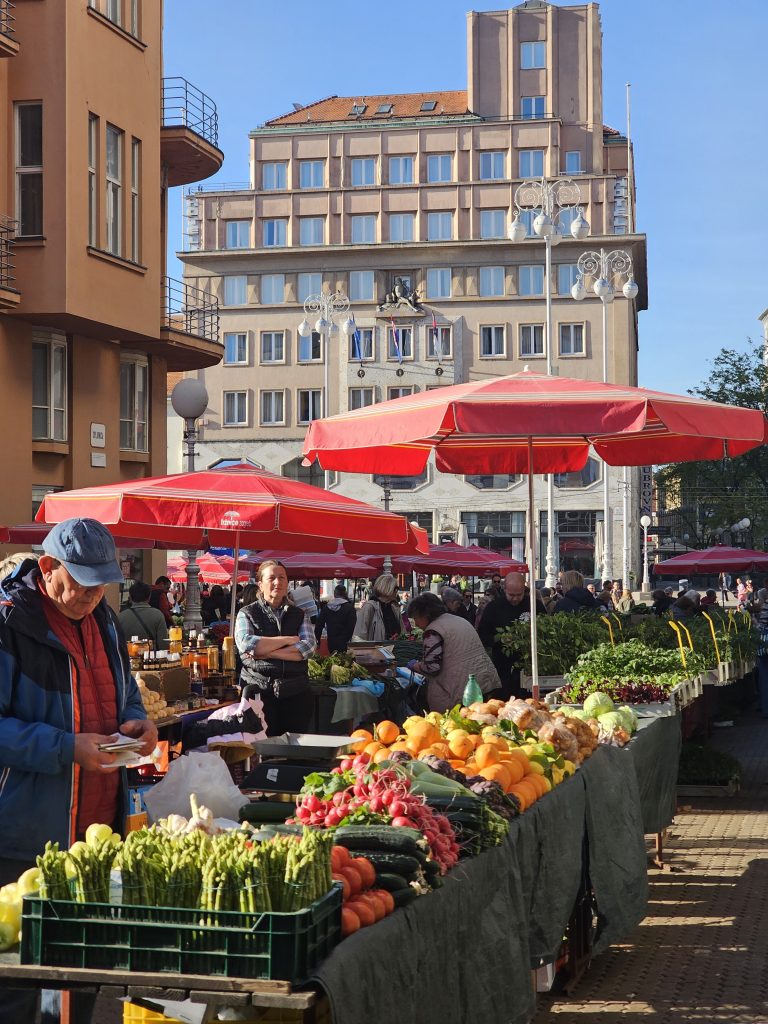
Morning Colours in the City markets in Zagreb
Unlike other cities, Zagreb felt very different. I would not say exciting or beautiful, but it had certain something. At least for two reasons, I was joined by some mutual friends and enjoyed more than one could expect in the first meeting with some new people. And, there was the city itself. It was so calm, yet so lively. The city has sort of a magnetic pull that makes you sit at the same spot for hours. And, of course, it makes you not forget it. Maybe that is the reason I have decided to write something on it leaving aside some of the deadlines I’d rather not think about. I reached Zagreb in the morning, a bit after 6 o’clock. And, shortly, we started walking towards the city. I have not memorised the places I visited, so I will describe whatever I can remember and that will have to do. We started towards a park some fifteen minutes away from the bus station right after a slice of pizza, a very bad coffee and a mandatory morning cigarette.
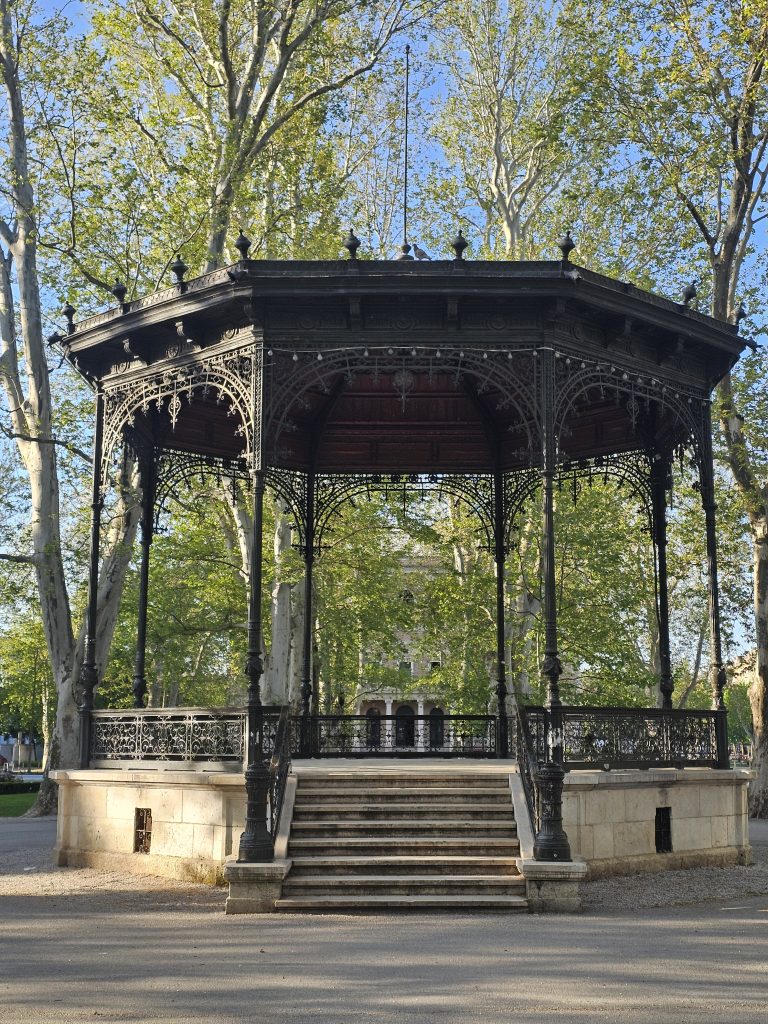
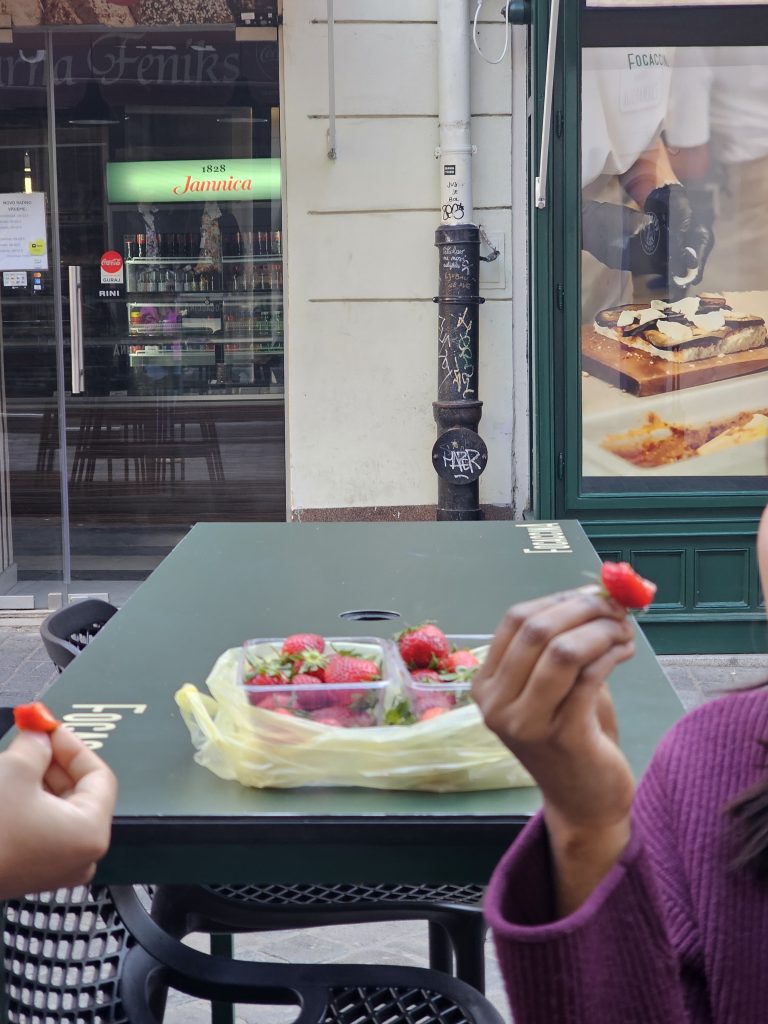
The Octagonal Music Stand that We weren’t very happy with and then came the berries
We reached the park in a bit. Oh! it didn’t look very fancy. The octagonal iron music stand or pavilion, that was weathered. And obviously we weren’t very successfully visualising eighteenth century concerts being played and place a pat on our own shoulders on what a beautiful place we have ended up in and so we quickly left. In a few moments, we were at the market. A nice little village like market with amazing colours and cheap groceries. We had the tastiest strawberries ever from the market. There were birds all over the place, mostly pigeons. Other day, one of my friends was dissing the pigeons. They hated them. To them, it was like some fat with feathers. I couldn’t agree. I think, they were not hated here that much. They would not be so many in numbers if they were hated, would they? Can a human being stay at a place where he is hated? Maybe.
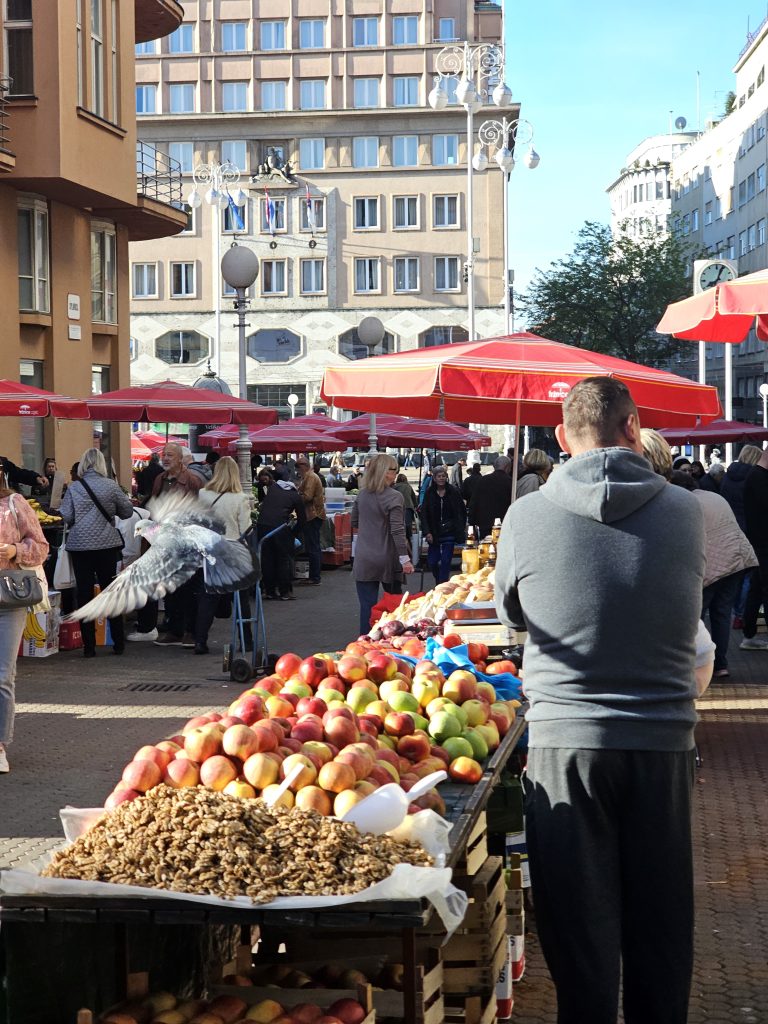
The Flying Pigeon
Note: I almost forgot to mention a statue of a horse rider which is so ubiquitious that it seems to be an obvious feature of all european capitals I have ever visited. How did I forget that? Do you think ‘Art’ loses its appeal when it exists in such an abundance?
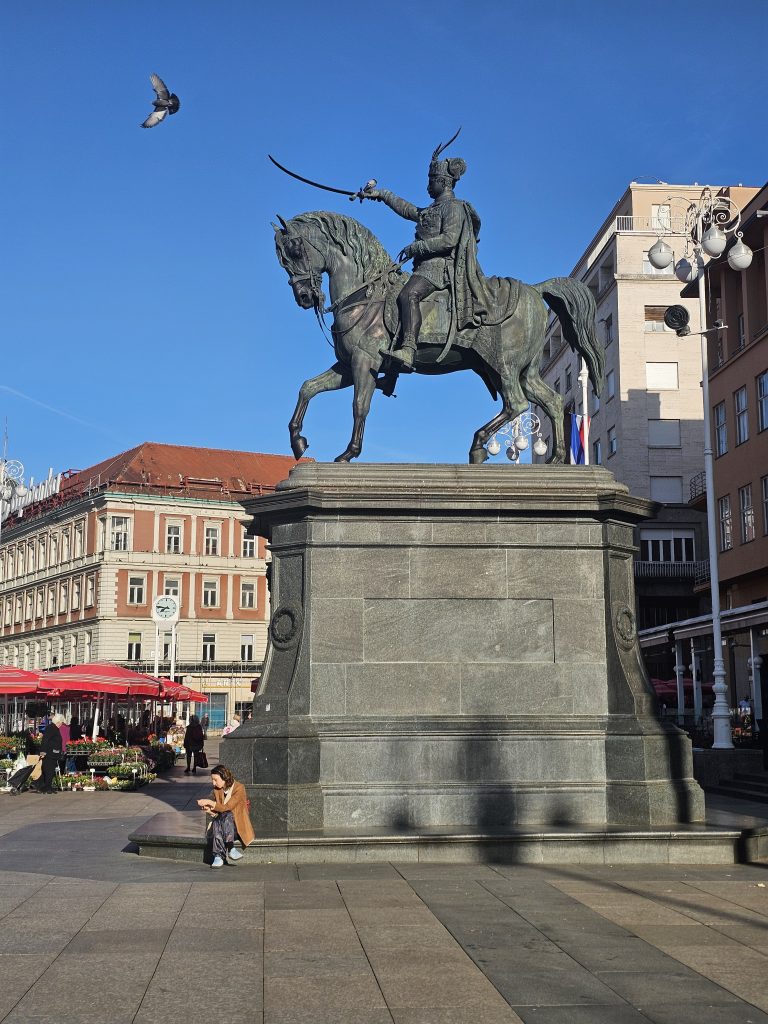
The Horseman
At this point, Google Maps led us to some spiral staircases and golden alleyways full of flowers and dancing men drawn on streets reminiscent of the dancing men from Sherlock Holmes stories. I do feel that the city started unraveling its magic with the streets and its beauty. There were paintings on the walls, trees full with unknown small fresh fruits, and there was this sort of a perfect symmetry between the lights and the shadows. My friends were busy clicking their photos and I was busy taking the pictures that one would easily find in google.
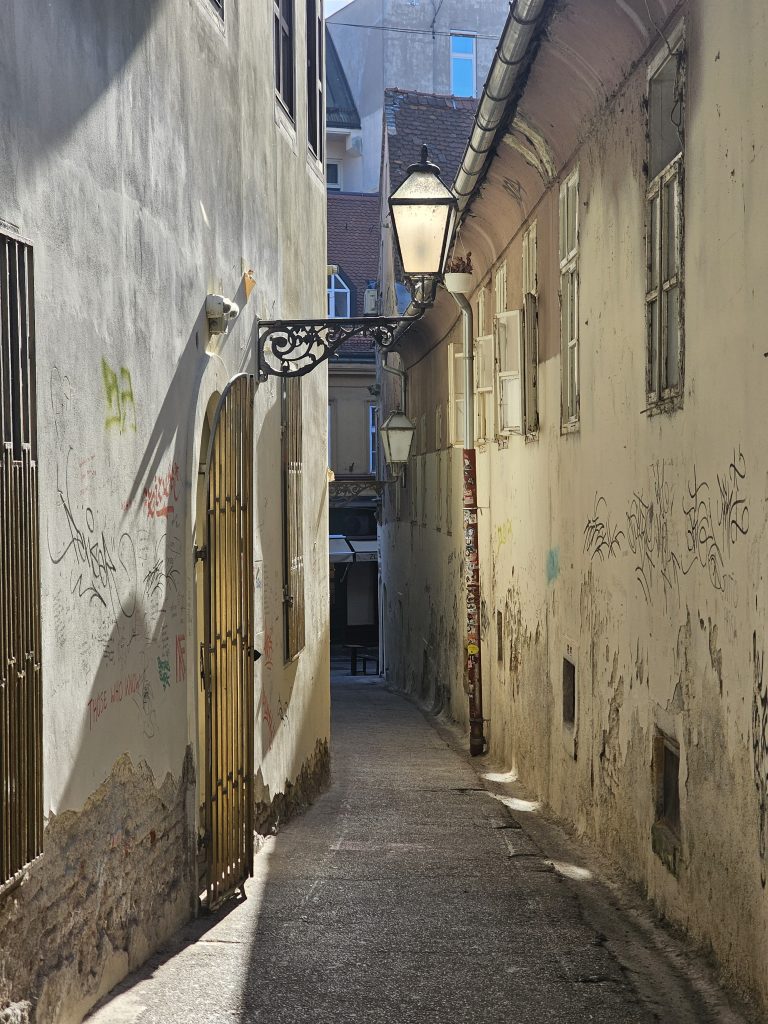
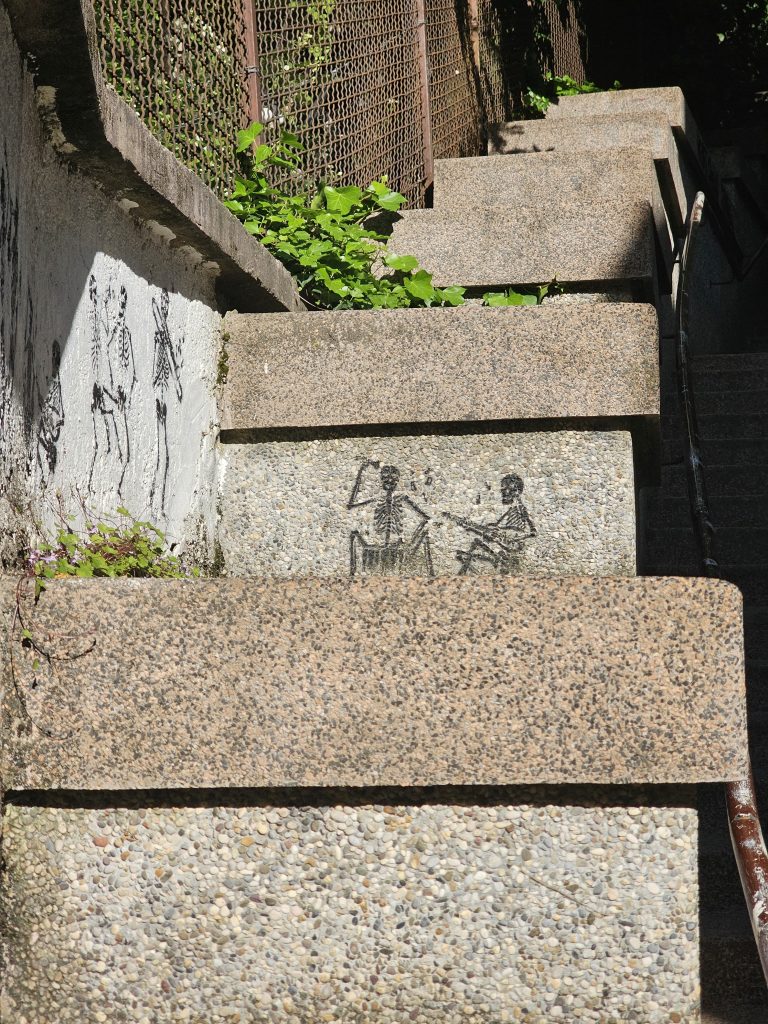
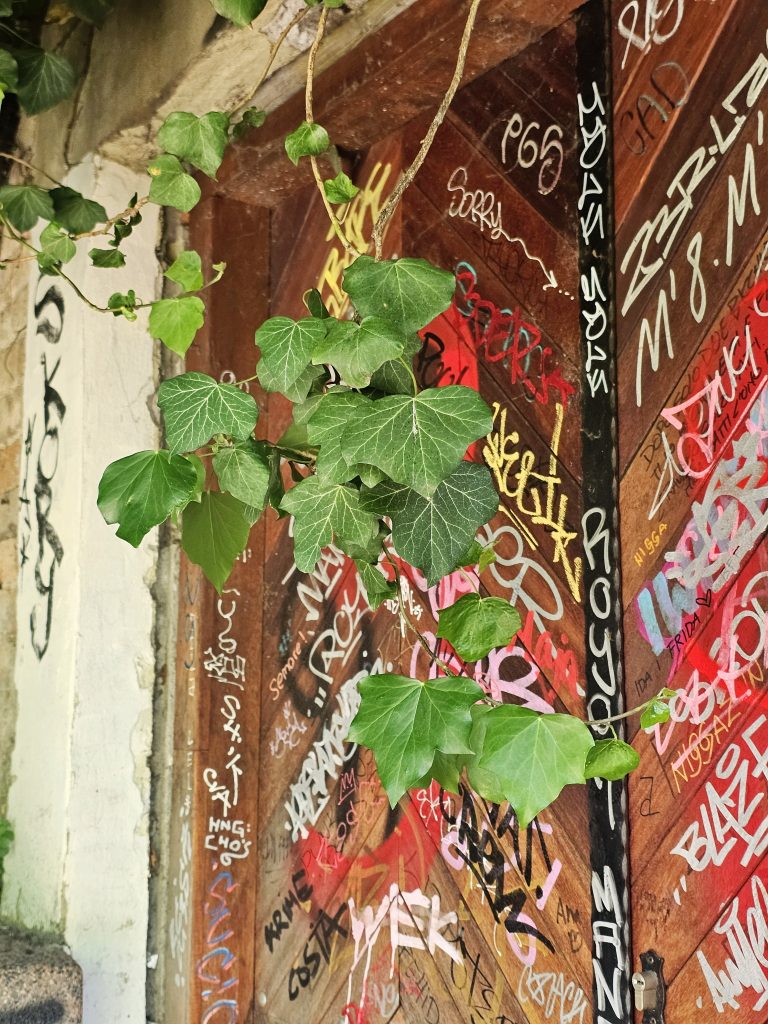
Golden Alleyways
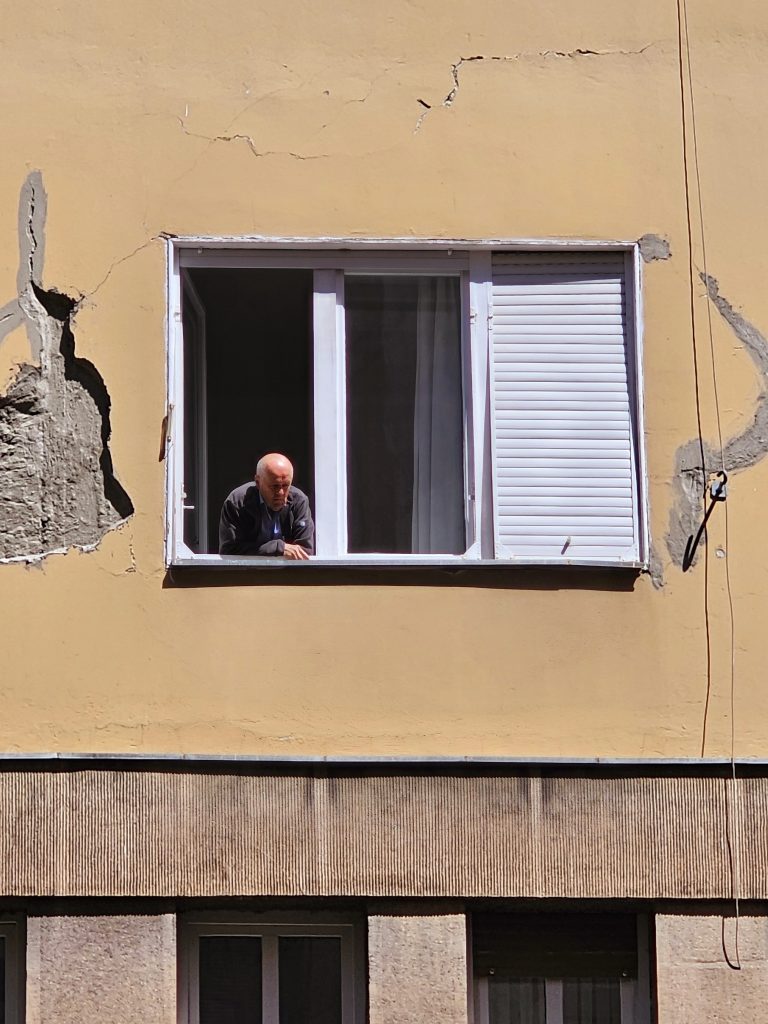
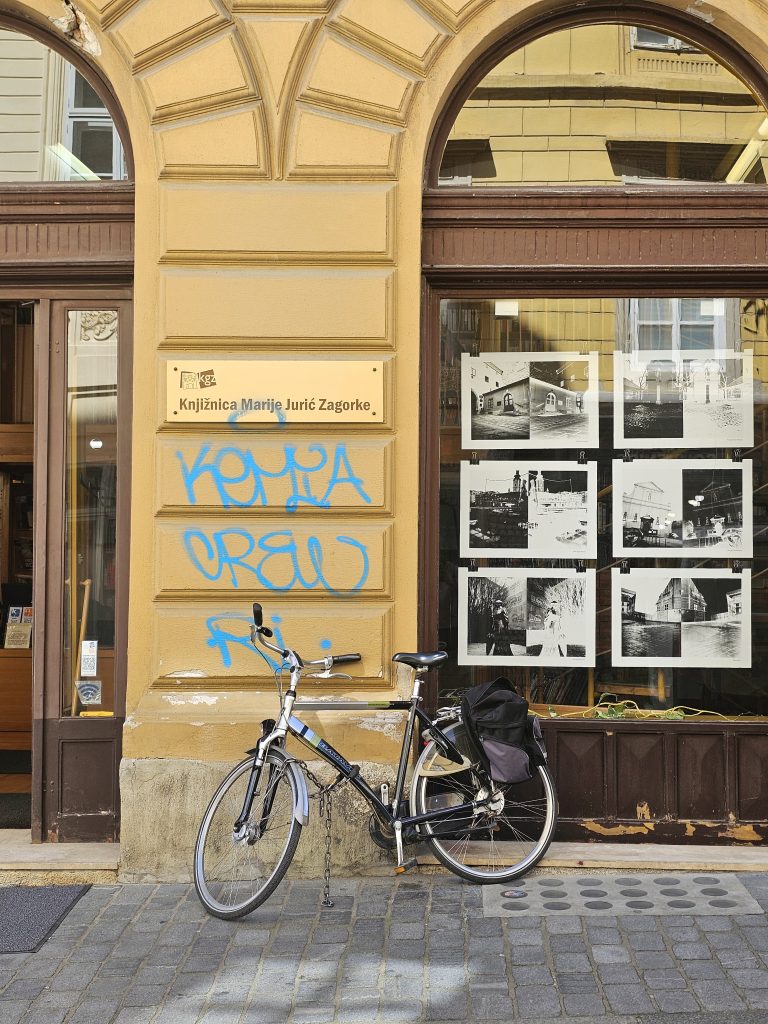
Yellows everywhere
The city then embraced us with a certain comfort. A warm hug that we did not want to let go of. We spent the rest of the day drifting between quite breweries, local restaurants, or sun-dappled park. Zagreb may not have offered us much, but I can’t say it was any less of a beauty than the others I visited. The rhythm started to get slow and the sun was dipping towards the horizon. I also needed to pack my bag and head back to Vienna, which is home, at least for now.
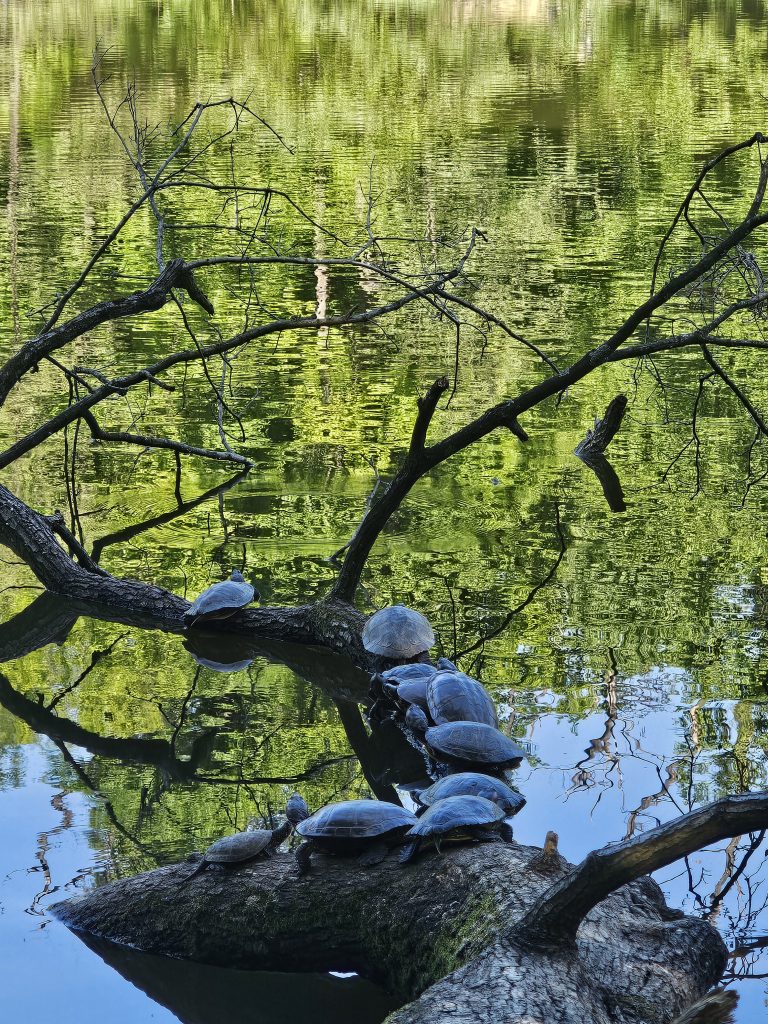
Peace
- Klimt’s ‘Jurisprudence’ in ‘Modern’ Bangladesh: The Tentacles of Crowd and The Death of The Hobbesian Social Contract
“The law, in its majestic equality, forbids rich and poor alike to sleep under bridges, to beg in the streets, and to steal their bread.” Anatole France, The Red Lily (1894)
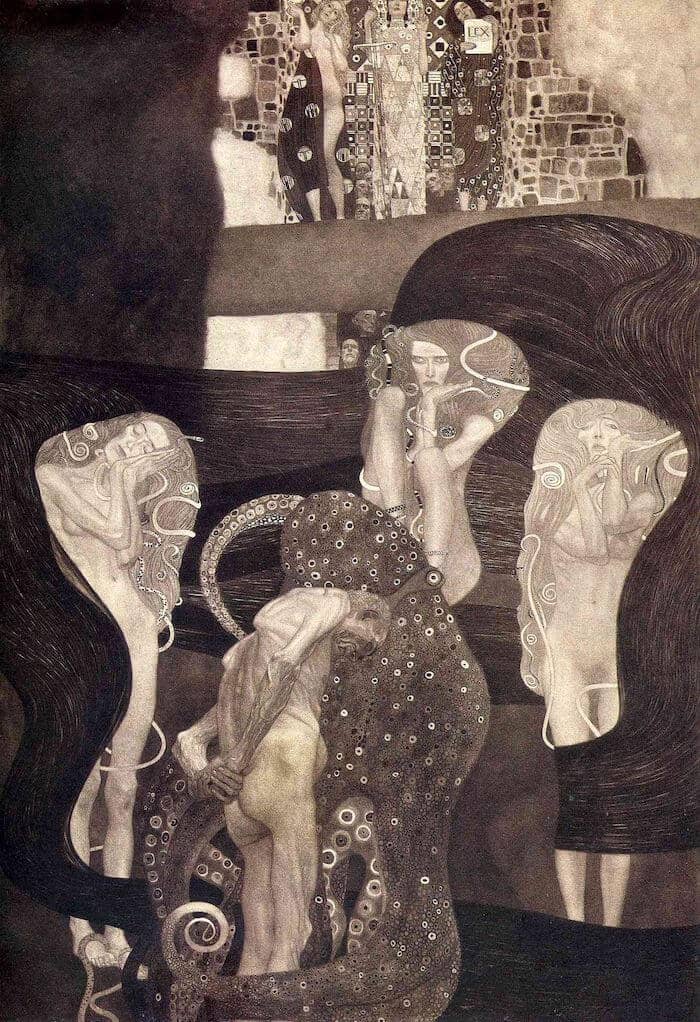
‘Jurisprudence’ by Gustav Klimt, 1903
After a frantic bureaucracy of visa and immigration, Vienna’s silence and peace feel less like a relief and more like a void. I have been staying here since September and have been walking past the ghost of Kafka and Mozart, and occasionally missing home. But surprisingly, it was not the warmth of the home that I had missed; it was rather the lack of adrenaline of uncertainty that had been providing me with an existential boredom. Suddenly, in one of my philosophy of law classes, I came across Gustav Klimt’s ‘Jurisprudence’ and the boredom was replaced by a grotesque portrayal of justice where an old man was being crushed by the Furies and the Gods were looking on from above with stoic indifference. I felt quite calm and soothing because of the terrifying sense of comfort, a dopamine of horror perhaps, if I can call that. It was very similar to the chaos that I had left behind sometime earlier. After a good night’s sleep, I felt a bit ‘itch’ being a sadist in the morning, but that feeling was not for long as I came across a darker reality in the newspapers, a man in Bhaluka, Dipu Chandra Das, hanging from a tree, being beaten and burned by a ghostly crowd which seemed a literal manifestation of Klimt’s nightmare in my own homeland.
In Klimt’s canvas, there is a victim who is no longer fighting the tentacles of the Law. He is lost, surrendered to it. The old man is not being punished by the Law, if one looks closely, he is being consumed by the lack of protection of the law. It might also be said that the Law had occupied or entangled the body in such a way that he can neither move nor shield himself from the horrifying pain. Meanwhile, the three goddesses, Truth, Justice, and Philosophy, exist on a very different layer of the story, watching with sheer indifference. They are allowing the incident to happen, committing a grave act by actively omitting their power to protect it.
The December night for Dipu Chandra Das was somewhat very similar to the painting. The mob or crowd dragged him through the streets, circled him, and hanged him from a tree. And this did not happen in an isolated place, but in a public street, where hundreds of people gathered, did ‘live’ on social media, beating him to death, and burning him till the body turned into ashes. Klimt’s Jurisprudence was too dark for the University of Vienna in 1903, but it happened in Bangladesh, in Bhaluka, in 2025 or should I ask, was it just Dipu or Bhaluka, or was it the entire socio-political structure that had orchestrated the nightmare?In elementary jurisprudence in law schools, we are taught about Thomas Hobbes’s state of nature and social contract, a bridge between cynical, fear-driven human clans and the state where the people surrendered their rights to the state as a gateway out of eternal chaos. This agreement, the very foundation of legislation, stands as an architectural blueprint for society. But, in the moments of institutional collapse, in the moment when Pandora’s box flung open, the people rushed to reclaim the power that they once had surrendered to the state. They transformed into the tentacles to entangle the weak, marginalized minorities, persons who are standing on a lower footing due to their identity. A people-pleasing state, despite its promise to protect everyone equally, reduces itself to a biased entity towards particular identities and fuels the brain of the predator octopus. And the civil society, at the point of intellectual bankruptcy, becomes cheerleaders of the state or the specific crowd that the state seeks to please, and stops becoming a watchdog against the power. Just like the Furies in the canvas, civil society is manufacturing a legitimacy of the state and the primal psychology of the crowd. In Bhaluka, the fire was lit by the hands of hundreds of people, but the fuel was provided by the power structure that thrived on this very chaos.
The horror reaches its apex when a fragile, post-conflict state does not merely tolerate the ‘tentacles’ of the mob but actively protects it. The state, out of a desperation to look powerful, rebrands the violence as a democratic will and allows the crowd to be its proxy executioner. The ‘stoic indifference’ that one will inevitably find from the Goddesses in Klimt’s canvas is, in reality, a calculated silence. In Bhaluka, the mob was the law’s shadow while performing the execution that a ‘modern’ state could not legally claim, yet needed to prolong its fragile grip on power.
The social contract that we celebrate in Academia, in many ways, is merely upholding a ghost. We believe that the state will protect us all equally, yet the reality remains that ‘some are more equal than others’. The revolutions and the upheavals often lead to a tragic irony, where they descend to the tyranny that they once intended to overthrow, echoing Orwell’s Animal Farm. Faces of the power change, but the victims remain the same; marginalised, workers, ‘others’. Dipu Chandra was not failed by a mob; he was excluded by a contract that never meant to protect him, a minority whose life had no currency in the corridors of civil society and the state.Here, my window leads me to a cold, snowy world, but in the reflection in the glass, when I can see myself, I go back and find myself belonging to the place where the law is not a shield, just a rotating sword, constantly changing hands, executing the powerless, marginalised, in a never-ending cycle. Bhaluka was one chapter of that grim history. The snow falls, but the cycle burns on.
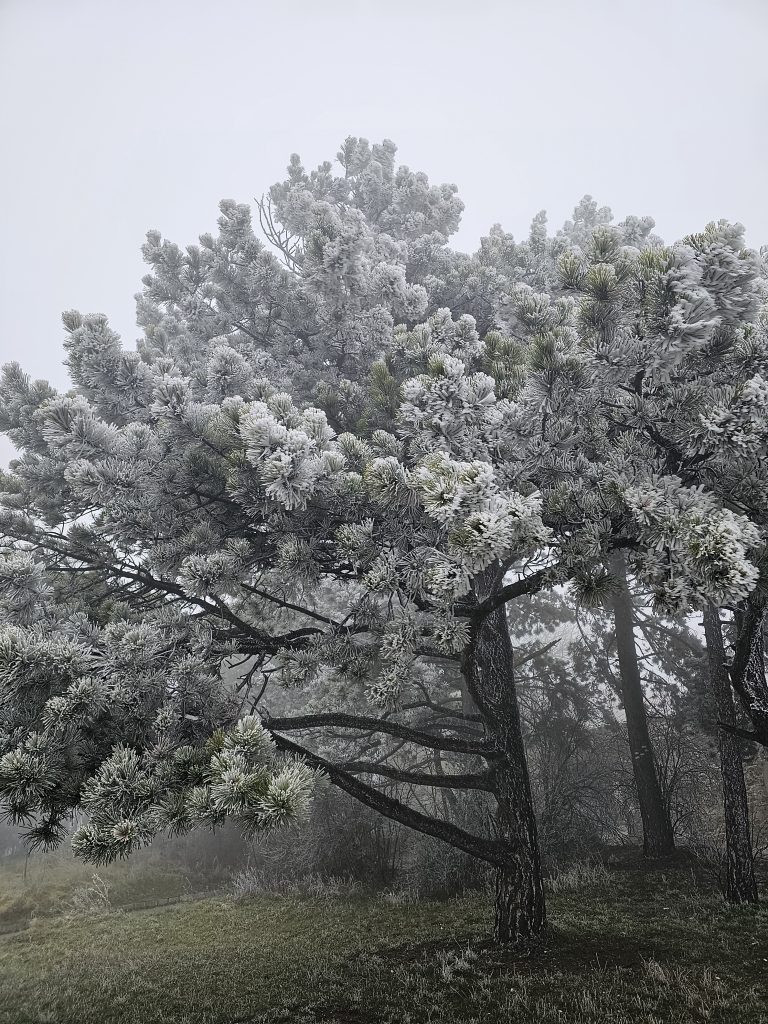
A silent, snowy Vienna afternoon, 2025
Reference:
France A, The Red Lily (Winifred Stephens tr, Stephane Leduc 1910)
Klimt G, Jurisprudence (1903-1907) [Painting, Ceiling of the Great Hall, University of Vienna; destroyed 1945]
Natter TG, Gustav Klimt: The Complete Paintings (Taschen 2012)
Orwell G, Animal Farm (Secker and Warburg 1945)
‘Garment worker beaten to death in Mymensingh? What happened that day?’ Prothom Alo,
https://en.prothomalo.com/bangladesh/crime-and-law/b0lqem1owr